
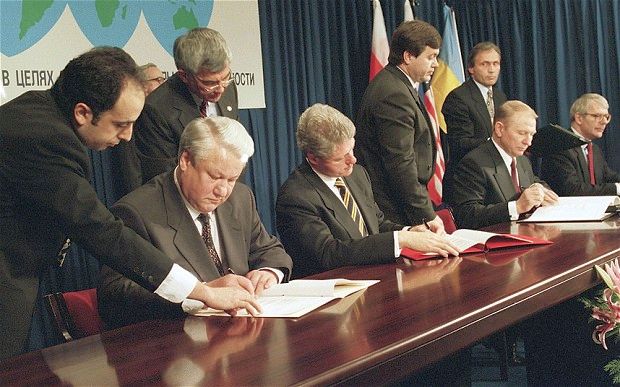
On December 5, 1994, Ukraine signed the Budapest Memorandum, relinquishing the nuclear arsenal it had inherited from the Soviet Union. In return, the guarantor states—the United States, the United Kingdom, the Russian Federation, along with China and France (to a lesser extent)—pledged to respect Ukraine's sovereignty and territorial integrity, refrain from the use of force or economic coercion. Ukraine fulfilled its commitments, dismantling over 2,000 nuclear warheads by 1996.
However, these assurances proved to be merely declarative. Russia, as a primary guarantor, violated the memorandum by annexing Crimea in 2014 and initiating war. The memorandum’s provisions lack effective mechanisms to address breaches. The United Nations has been limited to issuing statements, while Russia, wielding its veto power, blocks resolutions in the Security Council. Thus, the guarantor states' commitments have amounted to little more than symbolic gestures without tangible consequences.<\p>
The Budapest Memorandum cannot be considered a fully-fledged international treaty but rather a diplomatic instrument with limited legal force. Ukraine upheld its obligations but received no enforceable guarantees in return. This has exposed the fragility of international law, particularly in matters of collective security.
Today, there is a pressing need to revisit the mechanisms of security guarantees for Ukraine. Restoring its status as a nuclear state or joining a collective defense system like NATO might offer viable solutions to the failures of the Budapest Memorandum. Thirty years of history have demonstrated that international agreements without enforceable sanctions are nothing more than empty promises.