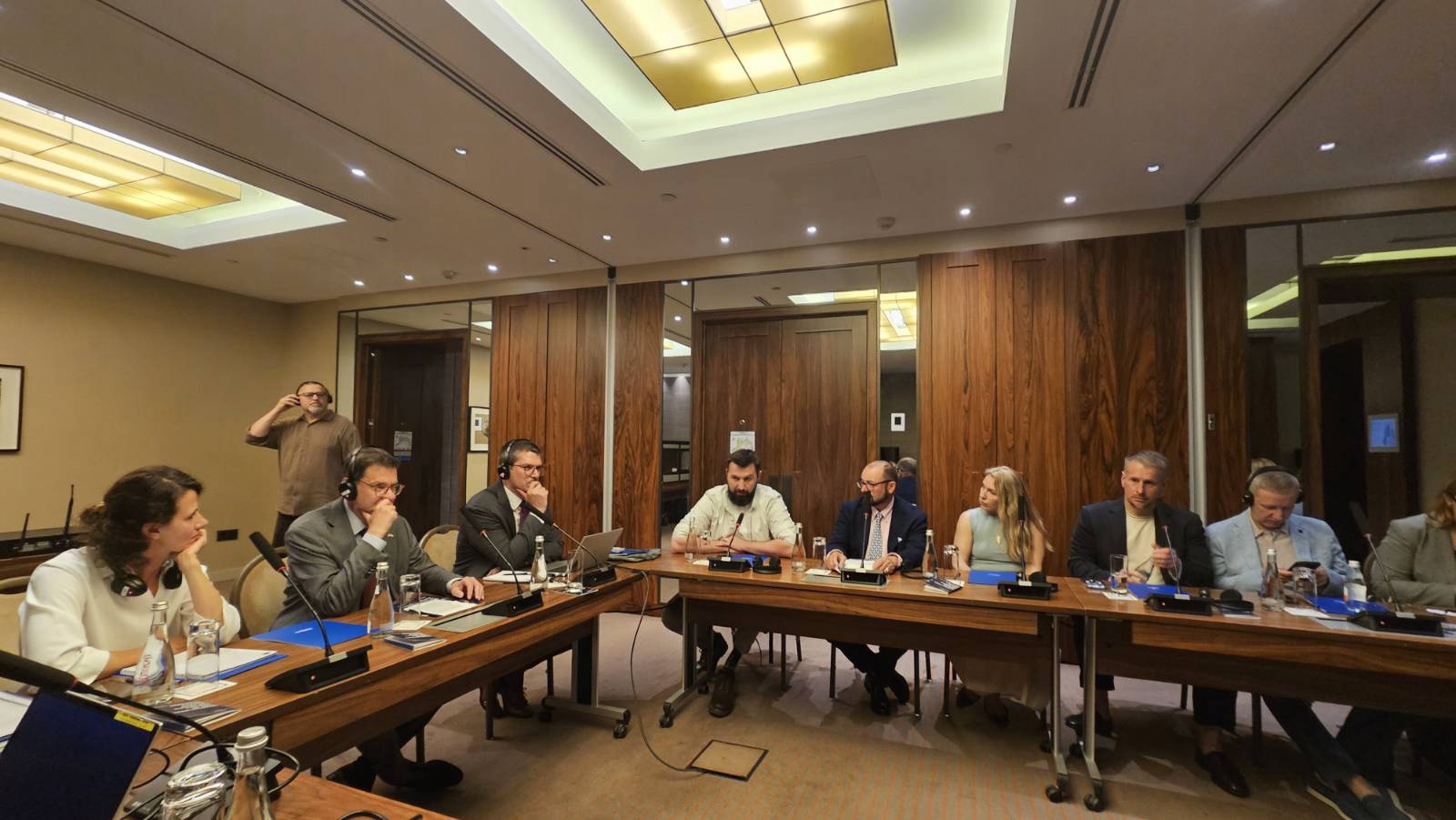
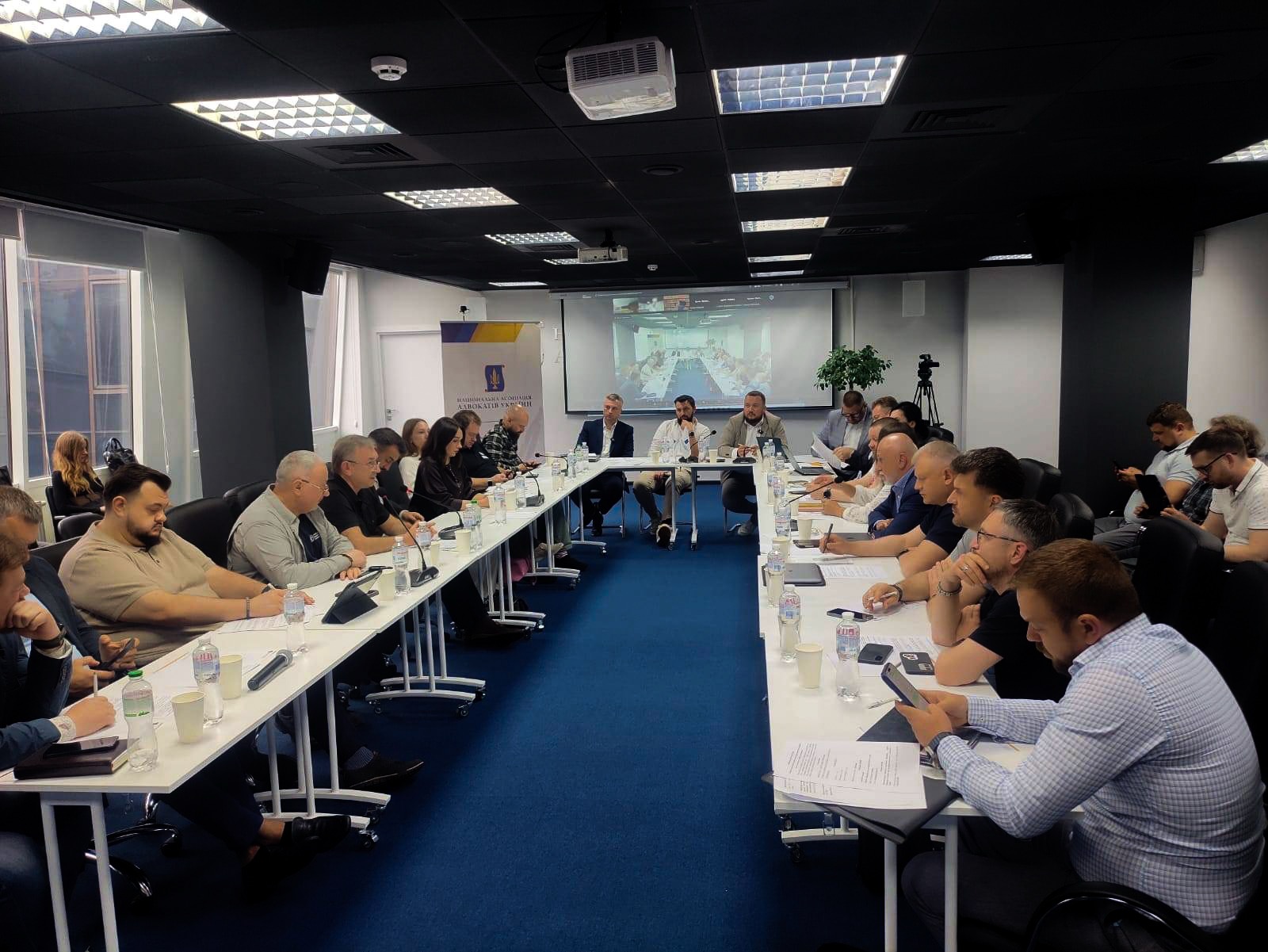
On May 12, 2026, the “SEAL” Survival and Special Training Center co-organized and participated in an event hosted by the Association of Corporate Security Professionals of Ukraine (ACSPU) titled “Reintegrating Veterans into Corporate Security: A New Human Resource, Risks, and Opportunities for Business.”
Participants in this event included:
CEO Club Ukraine;
Defence Club Ukraine;
SAYENKO-KHARENKO;
SK Security;
Federation of Employers of Ukraine;
corporate security leaders, business owners, HR directors, top management, and experts in risk management and compliance.
Discussion topics:
the strategic role of veterans in business and the security system;
integration risks and approaches to managing them;
psychological adaptation as a security factor;
practical models of integration in companies;
prospects for the development of this area in Ukraine;
As part of the event, the SEAL Survival and Special Training Center presented a strategic analytical report on qualitative research: “The Path to Reintegrating Veterans into the Corporate Sector” (the report is available here)
Ukraine is effectively shaping a new post-war model of society—a “veterans’ society”—and it will differ significantly from the pre-war country. A new social and professional group is emerging that will have a substantial impact on the economy, the labor market, the security system, the corporate sector, public administration, and the country’s social stability.
Ukraine will become one of the most “security-oriented” countries in Europe.
But if the integration system fails, the risks become a matter of national security. Therefore, the reintegration of veterans is an element of state stabilization.
The strategic importance of integrating veterans into the economy was emphasized by a veteran of the Russian-Ukrainian war, Deputy Minister of Economy, Environment, and Agriculture of Ukraine. Ihor Bezkaravaynystated that “the state is a stakeholder in the process of reintegrating veterans into the economy, but we must not forget that business is also one of the key stakeholders in this process and must already be looking at the situation as a whole.” In particular, he cited examples of professional retraining programs that enhance veterans’ ability to adapt socially as they return to civilian life.
As for the veterans themselves, Ihor Khalimon, a Board Member of the “SEAL” Center, added: “A veteran needs to understand that he is doing something necessary; this motivates him to make yet another sacrifice for the sake of the business into which he is being integrated. During our time in the army, we were taught to carry out our work without question. But we are capable of awareness. And after the war, we must also do our work in such a way that the country stands firm, that our labor brings benefit. When you realize that you are making a difference—you are in the ranks! If you are in the ranks—it means you haven’t given up yet. But a veteran must clearly understand his duties and the extent of his responsibility».
Addressing the business community, a Ukrainian researcher in the fields of psychology, business, and new economies, founder of the METHOD4U psychological support ecosystem,Head of the Veterans’ Rehabilitation Department at the SEAL Center, and PhD in Psychology Vira Romanovahighlighted some fundamentally important points: “Let’s be honest: your staff is frightened by the ‘otherness’ of those who have returned. When a soldier returns as a veteran and begins the job search, the issue of a professional identity crisis becomes acute. The lack of a unified standard causes veterans to feel disoriented and professionally isolated. And every company already has experience that can be leveraged to create an ‘internal standard’ for the smooth integration of veterans. By creating a system that will support and facilitate a successful return to the workforce. Integration does not happen through psychology. It happens through shared activities.
A veteran is not a challenge for your system. A veteran is a mirror that shows where your system is failing.
The key is not whether or not to hire veterans. The key is whether your system can withstand their arrival.Veterans are not a challenge for your business. It is the business that currently does not correspond to the reality in which they have emerged”
In conclusion, we would like to remind all interested parties that at our “SEAL” Survival and Special Training Center, professionals have developed a toolkit that is free from psychological disability. Our methodology is not about “treatment”; it is about “integration.” It is about building functional relationships through shared activities.
By joining forces with SEAL, you gain a methodology that transforms risk areas into growth areas, ensuring the sustainability of your company and the professional fulfillment of those who have returned.