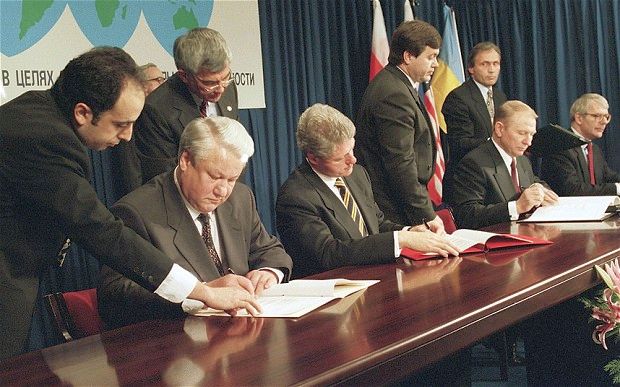
On December 5, 1994, Ukraine signed the Budapest Memorandum, relinquishing the nuclear arsenal it had inherited from the Soviet Union. In return, the guarantor states—the United States, the United Kingdom, the Russian Federation, along with China and France (to a lesser extent)—pledged to respect Ukraine's sovereignty and territorial integrity, refrain from the use of force or economic coercion. Ukraine fulfilled its commitments, dismantling over 2,000 nuclear warheads by 1996.
However, these assurances proved to be merely declarative. Russia, as a primary guarantor, violated the memorandum by annexing Crimea in 2014 and initiating war. The memorandum’s provisions lack effective mechanisms to address breaches. The United Nations has been limited to issuing statements, while Russia, wielding its veto power, blocks resolutions in the Security Council. Thus, the guarantor states' commitments have amounted to little more than symbolic gestures without tangible consequences.<\p>
The Budapest Memorandum cannot be considered a fully-fledged international treaty but rather a diplomatic instrument with limited legal force. Ukraine upheld its obligations but received no enforceable guarantees in return. This has exposed the fragility of international law, particularly in matters of collective security.
Today, there is a pressing need to revisit the mechanisms of security guarantees for Ukraine. Restoring its status as a nuclear state or joining a collective defense system like NATO might offer viable solutions to the failures of the Budapest Memorandum. Thirty years of history have demonstrated that international agreements without enforceable sanctions are nothing more than empty promises.
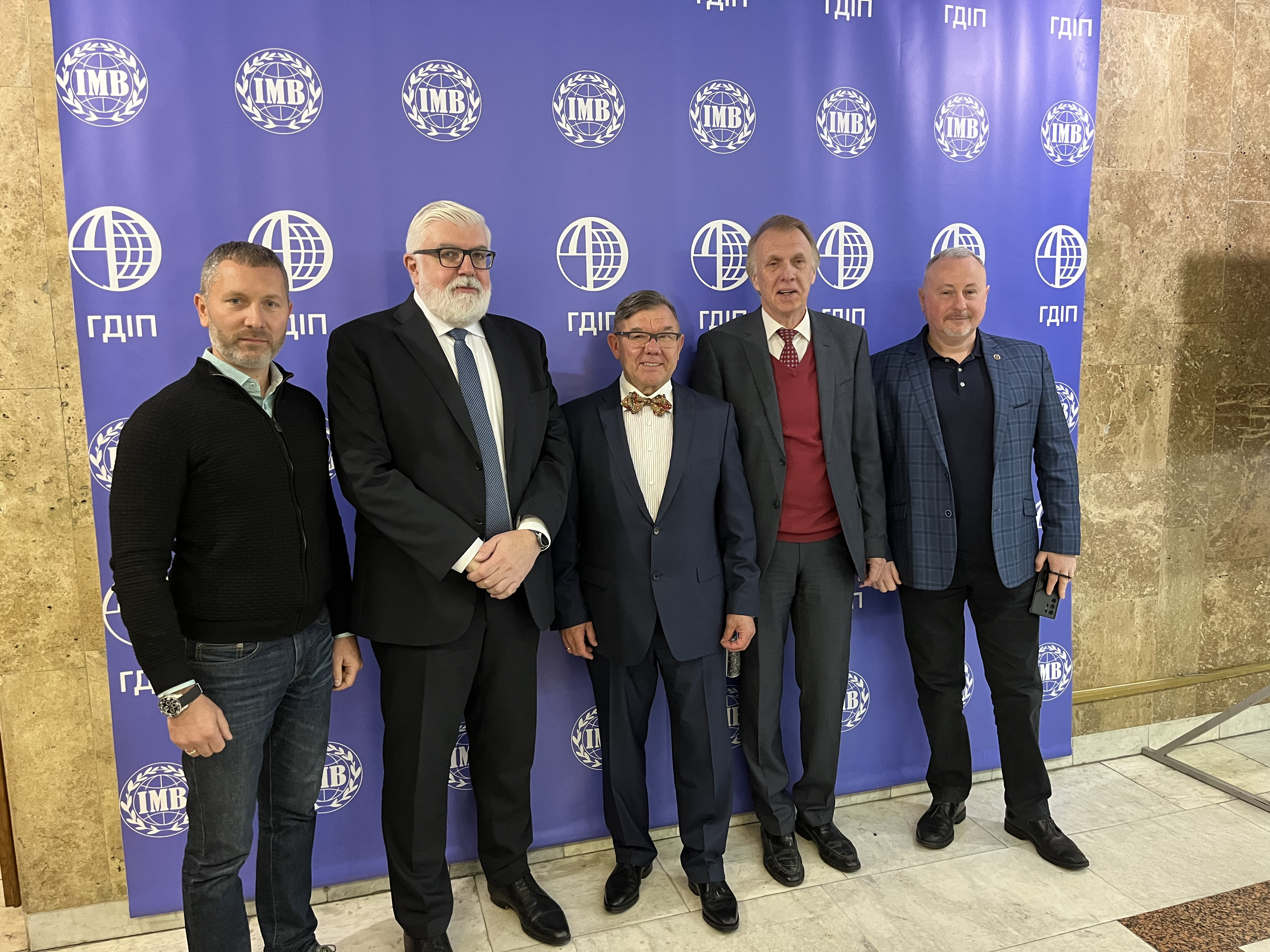
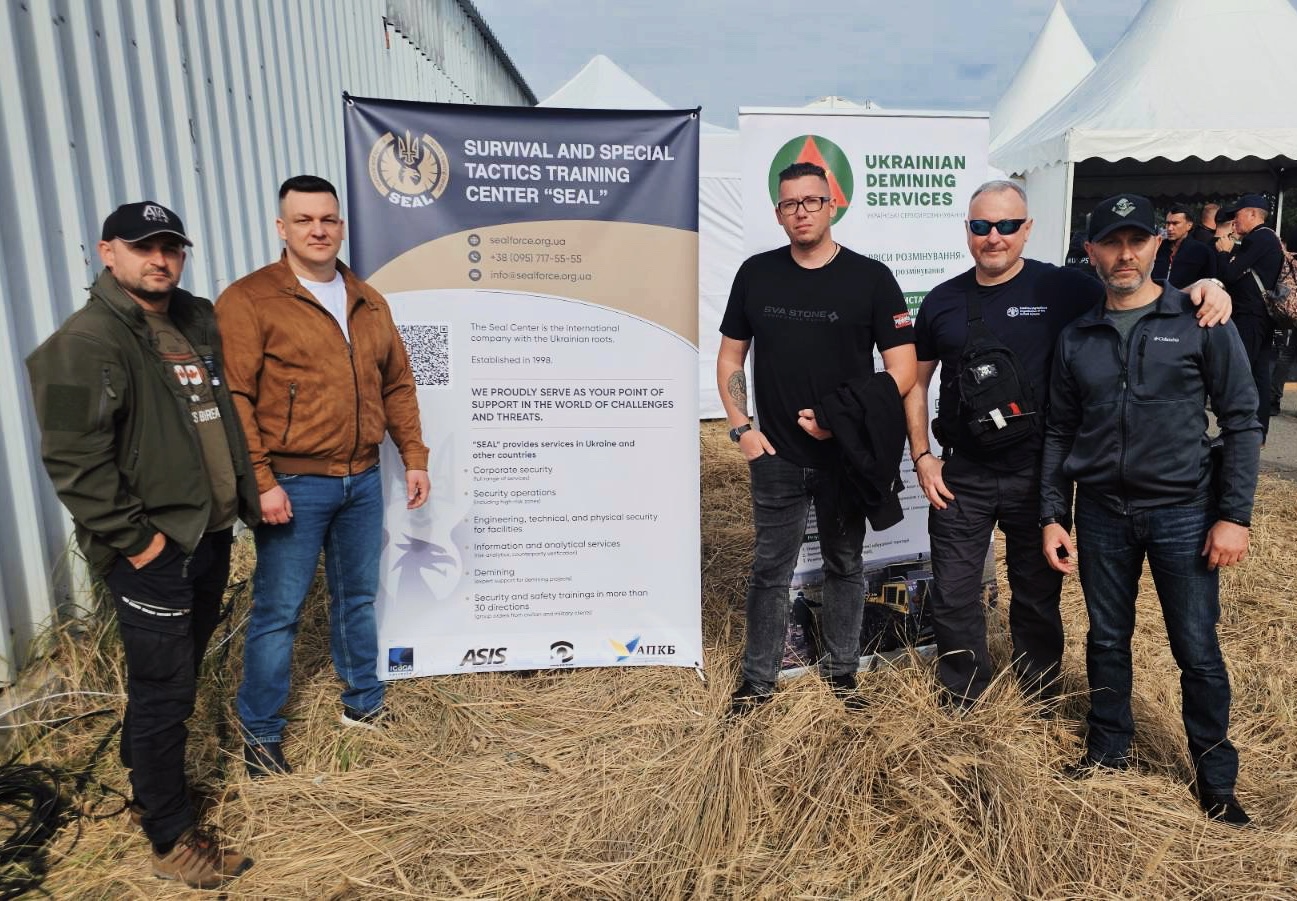
The SEAL Center extends its respect and heartfelt congratulations to our partners: Educational and Scientific Institute of International Relations (NNIMV) at Taras Shevchenko National University of Kyiv and the Directorate-General for Rendering Services to Diplomatic Missions ("GDIP") on the 80th anniversary of the institute's founding and the presentation of the jubilee 25th edition of the scientific yearbook Ukraine Diplomatic and GDIP's signature publications.
Ukrainian diplomacy has reinvented modern diplomacy and achieved significant results on the international stage. It had no choice but to rethink classical approaches and methods, given the dire circumstances our nation found itself in February 2022. At its core, Ukrainian diplomacy has always been, and continues to be, focused on the Ukrainian citizen and soldier. Diplomacy has worked tirelessly over the past two and a half years for them. We owe the very opportunity to have an independent state, foreign policy, and diplomacy to those Ukrainian men and women in uniform.
As defined by Ukraine’s Minister of Foreign Affairs, Dmytro Kuleba (2020–2024), "The methods of wartime diplomacy continue to work today. They enabled us to accelerate decision-making, break down many walls, dispel many of our partners' fears, turn countless 'no's' into 'yeses,' and prove that the word 'impossible' does not exist in the Ukrainian diplomat's vocabulary." So how does wartime diplomacy differ from peacetime diplomacy, other than diplomats becoming fluent in military terminology and abbreviations?
In daily operations under extreme conditions, we have developed a set of principles. It may seem that these principles sometimes replace or supplement classical diplomacy, but that’s not the case. Principles of wartime and peacetime diplomacy should be combined in the correct proportions and situations.
The first principle of wartime diplomacy is persistence. This persistence does not only relate to weapons but extends to practically any international initiative or negotiation.
The second principle of wartime diplomacy is not fearing to put friends in uncomfortable positions in situations of critical necessity. True friends will understand.
The third principle is diplomacy without a Plan B. However, this doesn’t mean one couldn’t or didn’t have time to develop it. Rather, in the conditions of wartime diplomacy, you either achieve the necessary result, or it’s over.
The fourth principle is acceleration and compression of decision-making time. During war, a diplomat has no time to spare. In a country at war, circumstances change rapidly, and nuances are everywhere. As a result, protocols and procedures undergo total transformation during wartime because when lives are at stake, there’s no time for protocol.
The fifth principle of Ukrainian wartime diplomacy is flexibility and inclusivity in decision-making, akin to a "menu" approach. As Sun Tzu wrote, war is offense and maneuver. Offense is where one is firm and principled; maneuver is where one demonstrates flexibility.
The sixth principle of wartime diplomacy is "everyone talks to everyone," or "total diplomacy." In a warring country, the classic diplomatic model — "everything through the Ministry of Foreign Affairs" — doesn’t work. The Ministry of Foreign Affairs alone, regardless of its staff size, cannot handle the enormous volume of communication that occurs.
The seventh principle is clarity and directness in expressions appropriate to the specific context. During war, it’s better to appear awkward than to speak in a way that isn’t immediately understood or, worse, misunderstood, rendering your words ineffective. Wordsmithing is better suited for peacetime. In wartime, the goal is to convey a clear message to the right audience as quickly as possible. To achieve this, one must deeply understand the specific audience and communicate with it concisely, directly, and firmly, yet contextually.
This list of seven wartime diplomacy principles is not exhaustive. We will likely need to invent and implement more principles to win this war and prevent global crises similar to Russia's unprovoked aggression against Ukraine, ensuring a just peace.