• News

News

Building a Responsible Private Security Industry in Ukraine and Beyond

Dear colleagues!

23.05.2025 the SEAL Centre was honoured to be invited on behalf of the Ambassador of Switzerland to Ukraine to a roundtable discussion on ‘Building a Responsible Private Security Industry in Ukraine and Beyond’, supported by the International Code of Conduct for Private Security Service Providers (ICoCA).

Established in 2013 and headquartered in Geneva, Switzerland, ICoCA is the leading international organisation committed to ensuring responsible, transparent and accountable private security practices worldwide. As part of its mandate, ICoCA works with governments, security service providers and key stakeholders around the world to improve private security practices in line with international standards, including the 2010 International Code of Conduct for Private Security Service Providers. To date, eight governments, more than 160 PMSCs, some of which operate in Ukraine, nearly 60 civil society organisations and 79 observers, including multinationals, have joined ICoCA. The Government of Switzerland currently chairs the ICoCA Board of Directors.

Private security service providers continue to play an important role in high-risk and challenging environments around the world, including in Ukraine. By operating responsibly, respecting international norms and having an appropriate national legal and regulatory framework, private security providers can contribute to a safe and secure operating environment, while contributing to national and regional efforts towards stabilisation and economic development. The private security sector is a major employer in many countries and plays an important role in disarmament, demobilisation and reintegration (DDR) initiatives.

The following topics were discussed during the roundtable:

  • ICoCA's work and global efforts to improve standards in the legal private security industry;

  • Ukraine's membership in the ICoCA Government Sector;

  • Overview of current legislative initiatives in Ukraine to regulate the Ukrainian private security sector;

  • Capacity building and areas of cooperation in building an internationally recognised responsible private security sector in Ukraine.

The meeting was held under the Chatham House rules.
Dear friends!

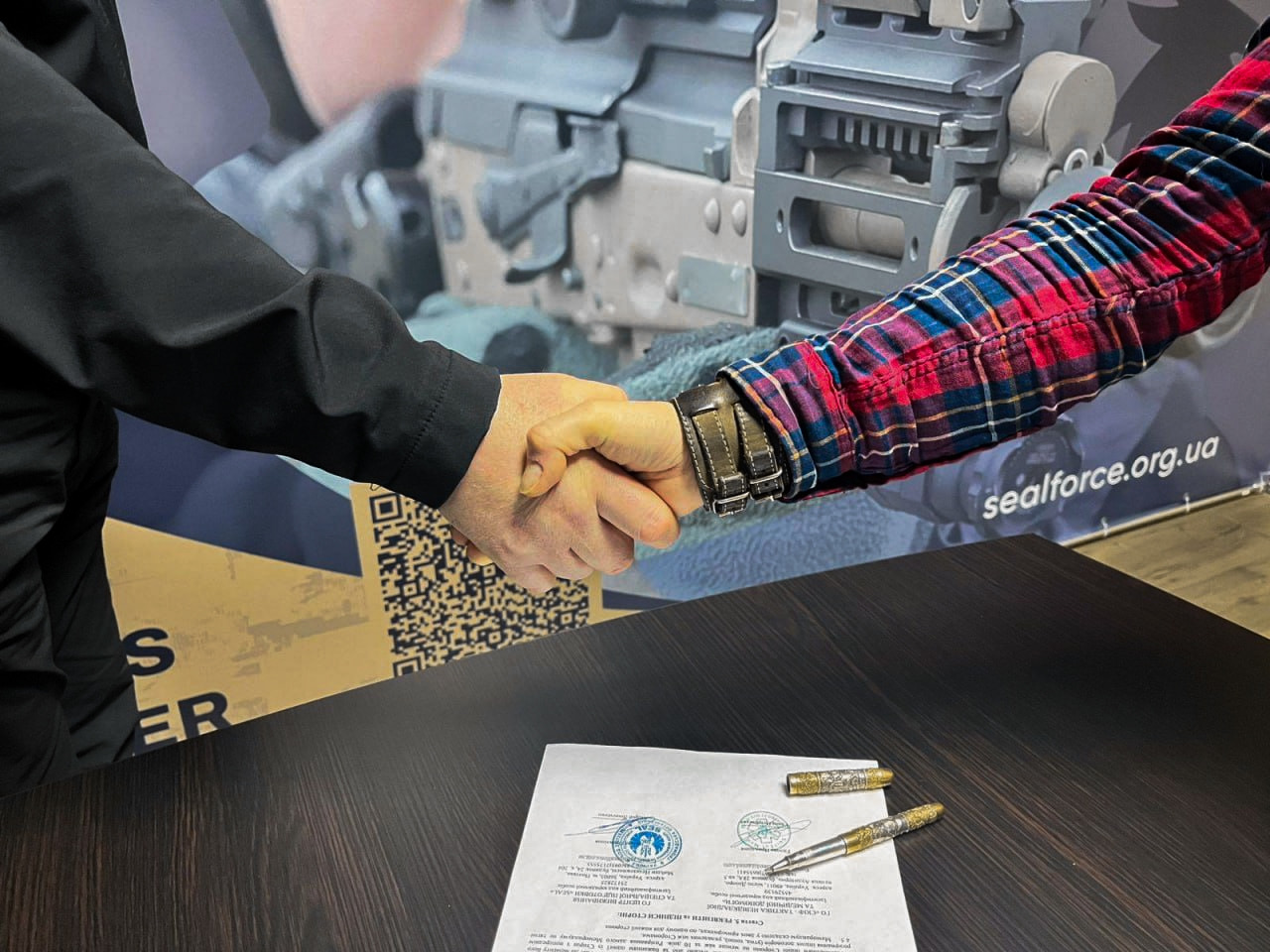
We would like to inform you that the NGO "SEAL Survival and Special Training Center" and the NGO "SKIF - emergency and medical aid tactics" signed a memorandum of cooperation, legally cementing a partnership that has been ongoing for some time.

The main goal of such interaction is the implementation of modern standards in the field of first aid and tactical medicine, raising awareness of citizens in the field of first aid and, of course, first of all, helping the Defense Forces of Ukraine and training servicemen of the Armed Forces of Ukraine in the field of tactical medicine.

We hope that our joint efforts with the NGO "SKIF" will make it possible to save more than one life of our citizens.

Together to Victory!

Merry Christmas and a Happy New Year!

Dear partners, colleagues and friends!

The SEAL Survival and Special Tactics Training Center expresses its respect and gratitude to you for your trust, reliability and fruitful cooperation throughout the time we have been together. Without you our team would not be what it is now. Thank you for having another year together.

🎄Our Center congratulates all of you on the upcoming holidays and wishes you and your lovely ones a Merry Christmas and a wonderful New Year. May the holidays be filled with joy, positive emotions and warm family communication.

🎊We wish you the next year with justful peace, prosperity and new ambitious projects.

On behalf of SSTTC SEAL,

Chairman of the Board of Trustees,

Ex-Minister of Defense of Ukraine,

Lieutenant General (retired) Andrii TARAN

🇺🇦 Dear defenders of Ukraine!

Today, on the Day of the Armed Forces of Ukraine, we honor those who stand as a wall between good and evil, giving us each new Ukrainian morning at the cost of their own lives and strength. You are the ones who turned "the second army of the world" into the second army in Russia, forced a "powerful" maritime state to remain ashore, and transformed "Kyiv in three days" into "why aren’t there shelters in Ufa?"

Your heroism and resilience have become symbols of Ukraine's new history. You are our pride, our faith, and our unbreakable shield. We understand the immense price you pay every day in this fight, and we bow our heads in memory of those who have joined the heavenly army. You have proven that only the Armed Forces of Ukraine can stop this horde, protect the civilized world, and triumph over evil.

Today is also Saint Nicholas Day — the patron of good deeds and protector of the needy. We believe that Saint Nicholas blesses you, gives you strength, and supports you in your noble mission. May this day bring you warmth, gratitude, and our prayers for peace and harmony.

We wish you health, unwavering belief in victory, and the constant feeling of our boundless gratitude. You are our strength, our love, and our confidence in the future. Glory to Ukraine and its Armed Forces!

Budapest Memorandum

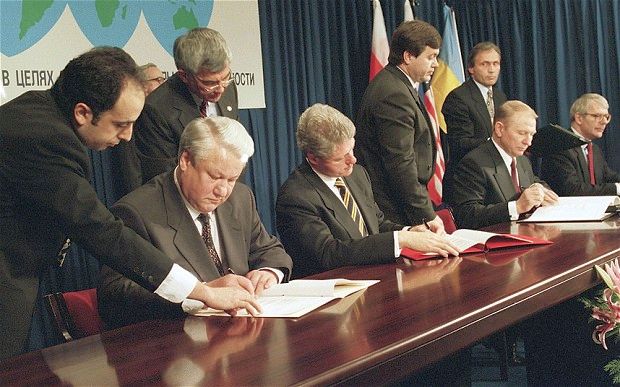
On December 5, 1994, Ukraine signed the Budapest Memorandum, relinquishing the nuclear arsenal it had inherited from the Soviet Union. In return, the guarantor states—the United States, the United Kingdom, the Russian Federation, along with China and France (to a lesser extent)—pledged to respect Ukraine's sovereignty and territorial integrity, refrain from the use of force or economic coercion. Ukraine fulfilled its commitments, dismantling over 2,000 nuclear warheads by 1996.

However, these assurances proved to be merely declarative. Russia, as a primary guarantor, violated the memorandum by annexing Crimea in 2014 and initiating war. The memorandum’s provisions lack effective mechanisms to address breaches. The United Nations has been limited to issuing statements, while Russia, wielding its veto power, blocks resolutions in the Security Council. Thus, the guarantor states' commitments have amounted to little more than symbolic gestures without tangible consequences.<\p>

The Budapest Memorandum cannot be considered a fully-fledged international treaty but rather a diplomatic instrument with limited legal force. Ukraine upheld its obligations but received no enforceable guarantees in return. This has exposed the fragility of international law, particularly in matters of collective security.

Today, there is a pressing need to revisit the mechanisms of security guarantees for Ukraine. Restoring its status as a nuclear state or joining a collective defense system like NATO might offer viable solutions to the failures of the Budapest Memorandum. Thirty years of history have demonstrated that international agreements without enforceable sanctions are nothing more than empty promises.

80 Years of the Institute of International Relations & 25 Years of "Ukraine Diplomatic": Challenges in Wartime Diplomacy

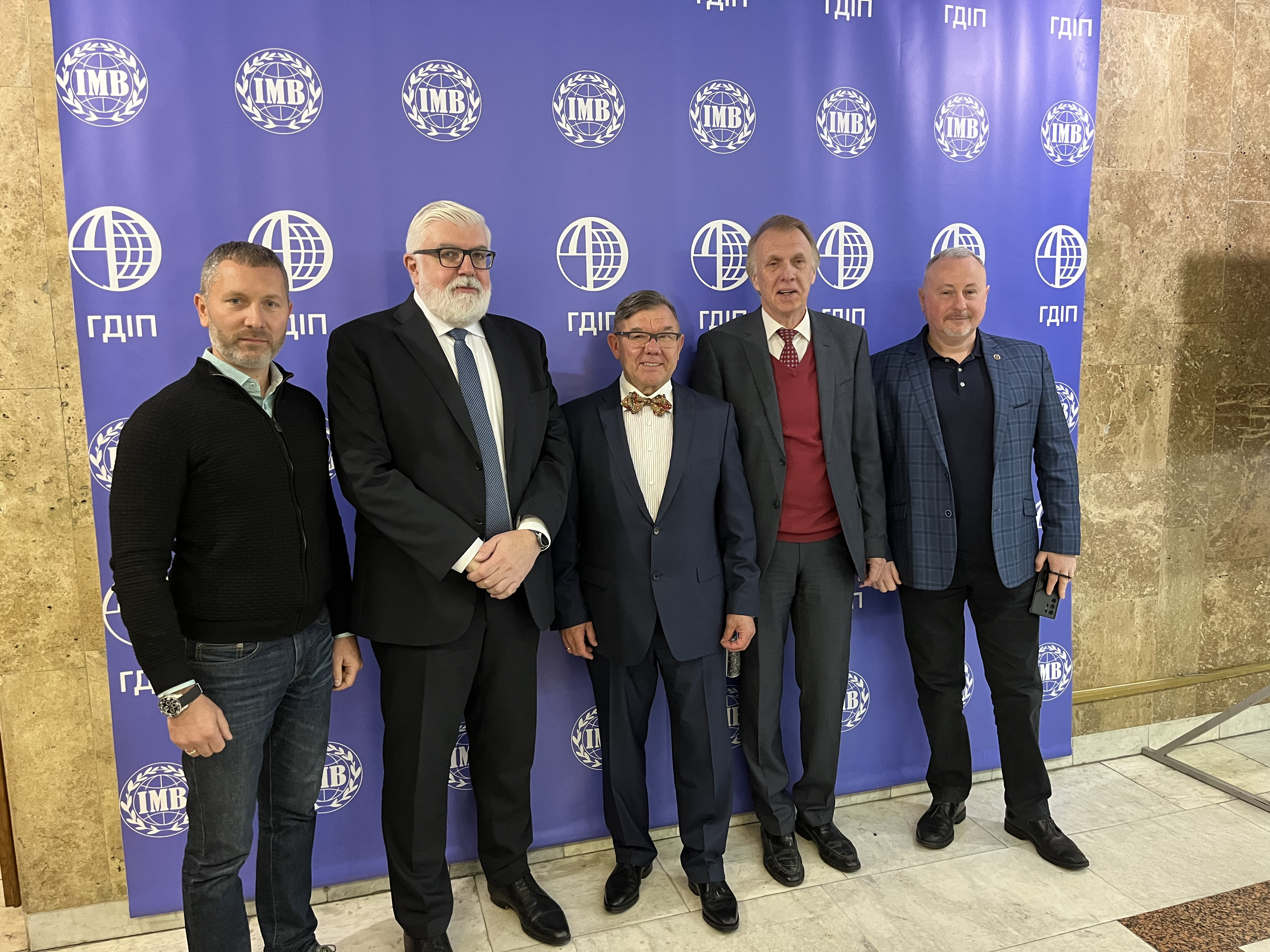
The SEAL Center extends its respect and heartfelt congratulations to our partners: Educational and Scientific Institute of International Relations (NNIMV) at Taras Shevchenko National University of Kyiv and the Directorate-General for Rendering Services to Diplomatic Missions ("GDIP") on the 80th anniversary of the institute's founding and the presentation of the jubilee 25th edition of the scientific yearbook Ukraine Diplomatic and GDIP's signature publications.

Ukrainian diplomacy has reinvented modern diplomacy and achieved significant results on the international stage. It had no choice but to rethink classical approaches and methods, given the dire circumstances our nation found itself in February 2022. At its core, Ukrainian diplomacy has always been, and continues to be, focused on the Ukrainian citizen and soldier. Diplomacy has worked tirelessly over the past two and a half years for them. We owe the very opportunity to have an independent state, foreign policy, and diplomacy to those Ukrainian men and women in uniform.

As defined by Ukraine’s Minister of Foreign Affairs, Dmytro Kuleba (2020–2024), "The methods of wartime diplomacy continue to work today. They enabled us to accelerate decision-making, break down many walls, dispel many of our partners' fears, turn countless 'no's' into 'yeses,' and prove that the word 'impossible' does not exist in the Ukrainian diplomat's vocabulary." So how does wartime diplomacy differ from peacetime diplomacy, other than diplomats becoming fluent in military terminology and abbreviations?

In daily operations under extreme conditions, we have developed a set of principles. It may seem that these principles sometimes replace or supplement classical diplomacy, but that’s not the case. Principles of wartime and peacetime diplomacy should be combined in the correct proportions and situations.

  • The first principle of wartime diplomacy is persistence. This persistence does not only relate to weapons but extends to practically any international initiative or negotiation.

  • The second principle of wartime diplomacy is not fearing to put friends in uncomfortable positions in situations of critical necessity. True friends will understand.

  • The third principle is diplomacy without a Plan B. However, this doesn’t mean one couldn’t or didn’t have time to develop it. Rather, in the conditions of wartime diplomacy, you either achieve the necessary result, or it’s over.

  • The fourth principle is acceleration and compression of decision-making time. During war, a diplomat has no time to spare. In a country at war, circumstances change rapidly, and nuances are everywhere. As a result, protocols and procedures undergo total transformation during wartime because when lives are at stake, there’s no time for protocol.

  • The fifth principle of Ukrainian wartime diplomacy is flexibility and inclusivity in decision-making, akin to a "menu" approach. As Sun Tzu wrote, war is offense and maneuver. Offense is where one is firm and principled; maneuver is where one demonstrates flexibility.

  • The sixth principle of wartime diplomacy is "everyone talks to everyone," or "total diplomacy." In a warring country, the classic diplomatic model — "everything through the Ministry of Foreign Affairs" — doesn’t work. The Ministry of Foreign Affairs alone, regardless of its staff size, cannot handle the enormous volume of communication that occurs.

  • The seventh principle is clarity and directness in expressions appropriate to the specific context. During war, it’s better to appear awkward than to speak in a way that isn’t immediately understood or, worse, misunderstood, rendering your words ineffective. Wordsmithing is better suited for peacetime. In wartime, the goal is to convey a clear message to the right audience as quickly as possible. To achieve this, one must deeply understand the specific audience and communicate with it concisely, directly, and firmly, yet contextually.

This list of seven wartime diplomacy principles is not exhaustive. We will likely need to invent and implement more principles to win this war and prevent global crises similar to Russia's unprovoked aggression against Ukraine, ensuring a just peace.